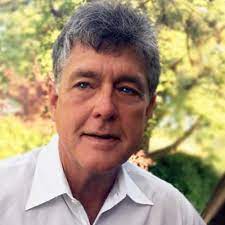
IN CONVERSATION WITH TOD TURNER
This past Friday, we hosted an Instagram Live with Intercept Music’s CEO, Tod Turner. For more than 40 years Tod Turner has repeatedly developed software businesses that address the needs of a specific market. Intercept Music was developed as a result of Tod’s expertise in building technology and the knowledge and network of music industry veteran and founder of Intercept, Ralph Tashjian. Here are some words from Tod about his and Ralph’s journey in developing Intercept Music, today’s digital landscape, the problem they’re solving, and the future of innovation in the music industry:
Intercept: Tod, I’d love you to start us from the beginning. What’s your background and how did that connect you to Ralph and eventually lead you to start Intercept Music?
Tod: Hahaha, that’s a long story but I’ll give you the Cliffs Notes version. My background isn’t music, it’s technology. I’ve been involved in a lot of different technologies over the years, I’ve started four different software companies, a couple dozen software patents with products like Skype and things like that, and have always been pretty innovative but not always timed with the market correctly. But nonetheless innovative, and sometimes we had to wait for the market to catch up. But I’ve been working in software for a long time.
Intercept Music came up because we had created an automated social media marketing tool, and we went out with our first marketing campaign and had about 4,000 leads. We would pick a small business and then build a social campaign within their region, and one of the things we quickly learned was that if we were going to automate that, we really needed to have an audience that wasn’t local. Like if you fix hot water heaters in Charleston, SC for example, you’re probably only relevant for about 60 miles. So it doesn’t do us any good to run social media ads across the country – we have to build an audience for that specific little market that you have. And that doesn’t scale very well as a business. So one of the things we learned is that we needed 1) a broad audience and 2) recurring products. In other words, something that if I did a good job with you today, you might want to buy something from me tomorrow. In my example of hot water heaters – if I do a good job and fix it today, you won’t need me for 10 years. So that means every customer is a new customer, and it’s much more difficult to grow. And the last thing is that we were looking for something that didn’t need a physical delivery, meaning that we weren’t bound by borders.
So one of the companies that came to us during that process was Digital Music Universe, and that was the guy who eventually became my partner, Ralph Tashjian. And Ralph had just started a company that was doing distribution services through a relationship with Ingrooves, which is now part of Universal Music. And Ralph responded to our ad wanting to know if we could help him with a marketing campaign, and once I understood what Ralph was doing and what he wanted to do – music met all the criteria. If you like music you’ll probably want to listen to more, so it’s recurring, and if I built an audience for people who like a certain type of music I can use that audience again which means we can amplify the effort put forth in any one of the artists he was hoping to work with.
So that was the short version. What we ended up doing was we took his software and combined it with our software. And the overall goal which is important to understand is that we were essentially building a bicycle wheel. We had to get the hub built, which is where we were collecting all the data because one of the things that’s been pretty prevalent in my background is that all the industries I’ve been involved in – that’s healthcare, that’s equipment calibration for maintaining government standard, lots of different industries – but all have really disparate services and were right for automation. I saw the same opportunity through the vision that Ralph had – that if we gather all the information once we could repurpose it many times, therefore being able to do a lot of things and saving time on behalf of the artist and labels. So for example: when you upload your music for distribution, once we have the metadata there’s no reason why the cover art, lyrics, those things can’t get pushed over to social media. You don’t have to enter them again. At the same time, you have to register your music, have a PRO where you get paid for the writer portion, we can register with a PRO and Soundexchange at the same time. Those were things in the vision of what we could do. And then Ralph’s vision really went beyond that. He saw where we could try to consolidate the marketing services so now you roll forward to where we are right now.
We have the bicycle wheel. We have the hub of global distribution, 230+ countries and territories and 88 different services. We gather all the information and then we start adding spokes on the wheel. Traditional distribution through Ingrooves, non-traditional distribution through SiriusXM and MusicChoice, and then on the marketing side we have connections to all the various social media platforms to promote the music. And we have connections to be able to provide playlist placement and music reviews, and even billboards in Times Square and those types of things. What we really try to do is wrap those things together into a single product and then make it easy for an artist or label.
And then two more things. On top of that we added full transparency on the data so everything we do is visible. All the way down to a very interconnected support system where everything we do for an artist or label is automatically tracked. If you asked us to put out music, there’s a work ticket for it. If you ask us to change the title on a track, or take music down, or run a marketing campaign, all of these things are tracked by tickets. And what we found was that after a year of testing all of this and adding on services, every time we looked at the phone logs half the people calling were just calling to find out whether we did what we said we could do, because there’s a real issue about performance in the industry. We’re trying to set ourselves apart by putting real humans on the other end of the phone and then we add accountability. So instead of having to call, everything is tracked by tickets on your Dashboard. You can log in and see the conversation that happened to get the job done along the way. So from distribution to customer service, we’ve tried to provide 100% transparency.
And now we’re getting to the fun part. So we’ve got the base, we’ve added a lot of the additional pieces we need – I think we have eight additional marketing services so far, but we’ve got another dozen that are in the process right now. I was on the phone today about lyric videos, for example. So there’s a lot of things we’re going to be able to offer, and for the artist or label, which I think is the most important part, I have a picture on the wall of my office that’s a hundred million pennies. And it’s a full five lanes of downtown New York and almost a block long. That’s a hundred million pennies. And that’s how many songs are at Spotify. That’s the competition. And then there’s 20 or 30 thousand more every single day. So it’s not about just getting discovered anymore, you have to do all the right things to rise above the noise. And all we try to do is not tie an artist down, we don’t ask for long term commitments, we try to give them all the options we can and all the tools we can so they can focus on what they really want to do which is make music, not the business side. So we’ve tried to make that part easy.
Intercept: Tod, you mentioned both artist and label Dashboards. What’s the difference between the two, and how does that layout look/work?
Tod: So basically everything centers on a Dashboard – let me start with the artists. There’s an artist Dashboard with graphs that tell the artists how many streams they have, trends on the streams, what their monthly earnings are, what their social connections are. They can distribute music through the Dashboard, they can order additional marketing services through the Dashboard, they can connect to the customer service. From the artist Dashboard they have an uber view of the performance on every song and all the revenue streams, down to and including the merch stores that we build for our artists. At the bottom there’s a heat map, where we show where the song is trending. Then on the Dashboard you can change the time frames to 7, 14, 30, however many days, or the earnings over however many months. So all of that is completely visible to the artist on the artist Dashboard.
If you are a label, the mental picture I try to have is that the artist dashboard is an umbrella over all of the artist services. The label Dashboard is an umbrella over all the artists that they manage. So the label Dashboard lets them look at the summary of how all of their artists are performing: which songs/artists are trending, who’s selling merchandise, who has releases coming up, what the status of those releases are…they can look at that from an uber view, but also can jump into each artists’ individual account to see the status of the individual. And then the labels have some additional services that aren’t available to the artist. Because it really takes the label focusing on the business side to get some of that extra revenue.
Intercept: We recently had a launch with Method Man this past month. How did that collaboration come about, and what does it mean for Intercept’s future?
Tod: Sure. We worked on the software and signed up labels and artists before we made any type of public release, because I really learned that the music business is all about reputation and you only have one, so I wanted to make sure we had a really good match with the services that these artists need. And if you’re a big company like Microsoft when you launch software, you know, you can spend two million dollars doing user focused groups to find exactly what they want. But when you’re a young, nimble, agile startup like we are, you go the other way. You talk to experts, you get the best input that you can, and then you put it in the hands of the customers and you listen. You listen to what they want, what they don’t want, and make adjustments along the way.
In December of last year we felt like we were really ready to go, and the industry continues to evolve, the percentage of artists that are becoming independent and moving away from major labels is crazy, and there’s a real movement that we saw towards these indie artists and labels really being able to compete with major labels and their services. So we felt that there was really a message of empowerment that we could deliver based on what we were doing with the software, and what we were putting in the hands of the labels and the artists. So we started looking around for who we might find as an icon for one of the many genres that we work with, and Method Man came to mind. In our opinion he’s an absolute icon not just on the music side – of course he’s very talented there with Wu Tang Clan and everything else, but he’s a real symbol of starting with very little and really empowering himself, and being empowered by people that were in his life along the way. And so we just thought he was the perfect representative for launching the company, and fortunately for us he agreed.
Intercept: In that description we heard the word “empowered” a few times. And since the launch Intercept’s slogan has been “Independence Empowered.” What does that mean to you personally and your team?
Tod: Wow, that’s a personal thing. I hadn’t worked with artists before this company, but until you do, until you have someone place this thing they’ve worked on for six months in your hands – it may be good, it may not – but to them they put their all into this creation and you have to treat it that way. It’s special to them. And so we really wanted to come up with a way where we can give them all the tools, provide them training, but not provide strings. I’ve talked to so many artists who have gotten signed, were so excited, maybe they were there for a while, and the label gets somebody else who might be more important but this artist is still locked up and in the background they’re not getting any support, they’re not feeling any love, and they’re stuck. Their music lives there forever. So when you have that on one side and then on the other side you look at the risks of an artist or label trying to figure it out on their own, all the way down to trying to promote music and not realizing that the people you hire use bots, and Spotify catches them and your music may be banned from Spotify. The risks are really high. So to me, this sounded like an opportunity where we could put this together, put some really talented people – I’m actually one of only two people on our team who doesn’t have a music background – everybody else does. And that’s on purpose.
Intercept: Last but not least – what are you listening to these days?
Tod: Oh boy, I don’t have top music – it depends on my mood. I could have reggae music on in the morning, I could have Eric Clapton on in the afternoon, and I might have Ibiza music on in the evening, it just depends on my mood. There’s not really any genre of music that I don’t like, but there’s a lot of classic music that still has a special place for me. That’s the really cool thing about music. It can take you back to where you were when you first heard it and it’s a really great medium for that.
It was such a pleasure hosting our CEO Tod Turner on our Instagram Live this week. Stream the full video HERE and stay tuned for more from Intercept Music!